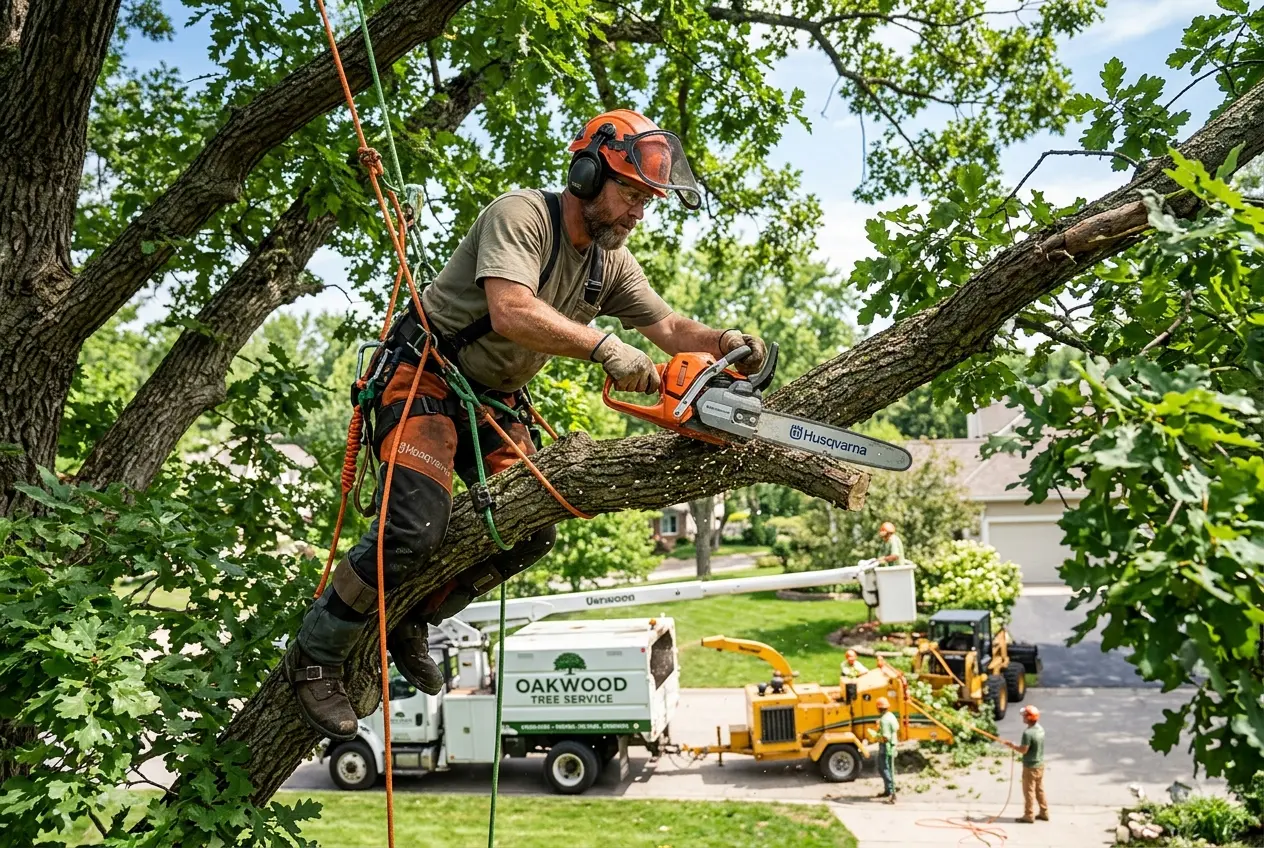
Proper trimming extends the life of Charlotte's signature willow oaks and crape myrtles while preventing storm damage. We follow ANSI A300 standards—unlike many crews who over-prune or 'top' trees, causing long-term harm.
For Ballantyne's newer developments, we shape young trees to develop strong branch structure. In established neighborhoods like NoDa, we carefully thin dense canopies to reduce wind resistance during thunderstorms. Our climbers are trained to identify and remove weak 'V-crotch' unions common in water oaks before they split.
Spring visits focus on removing deadwood after winter storms, while summer trims improve air circulation to prevent fungal issues in our humid climate. We never leave 'lion's tails' or stub cuts that invite pests—every cut is made at the branch collar for proper healing.
For Ballantyne's newer developments, we shape young trees to develop strong branch structure. In established neighborhoods like NoDa, we carefully thin dense canopies to reduce wind resistance during thunderstorms. Our climbers are trained to identify and remove weak 'V-crotch' unions common in water oaks before they split.
Spring visits focus on removing deadwood after winter storms, while summer trims improve air circulation to prevent fungal issues in our humid climate. We never leave 'lion's tails' or stub cuts that invite pests—every cut is made at the branch collar for proper healing.
Our Process
- 01 Step 1: Health assessment identifying dead/diseased limbs
- 02 Step 2: Structural pruning for balanced weight distribution
- 03 Step 3: Crown cleaning to remove crossing branches
- 04 Step 4: Selective thinning for light penetration
Benefits
- Reduces storm damage risk by 40%
- Improves flowering in ornamentals
- Maintains clearances from roofs and power lines
- Promotes fruit production in apple and pear trees
Frequently Asked Questions
When is the best time to trim oaks?
July-February to avoid oak wilt fungus spread. We sterilize tools between jobs as an extra precaution.
Can trimming help with pine pollen?
Thinning crowns reduces pollen production slightly, but we recommend planning outdoor spaces accordingly during spring.
How often should mature trees be trimmed?
Every 3-5 years for shade trees, annually for fast-growing species like silver maples common in Concord.